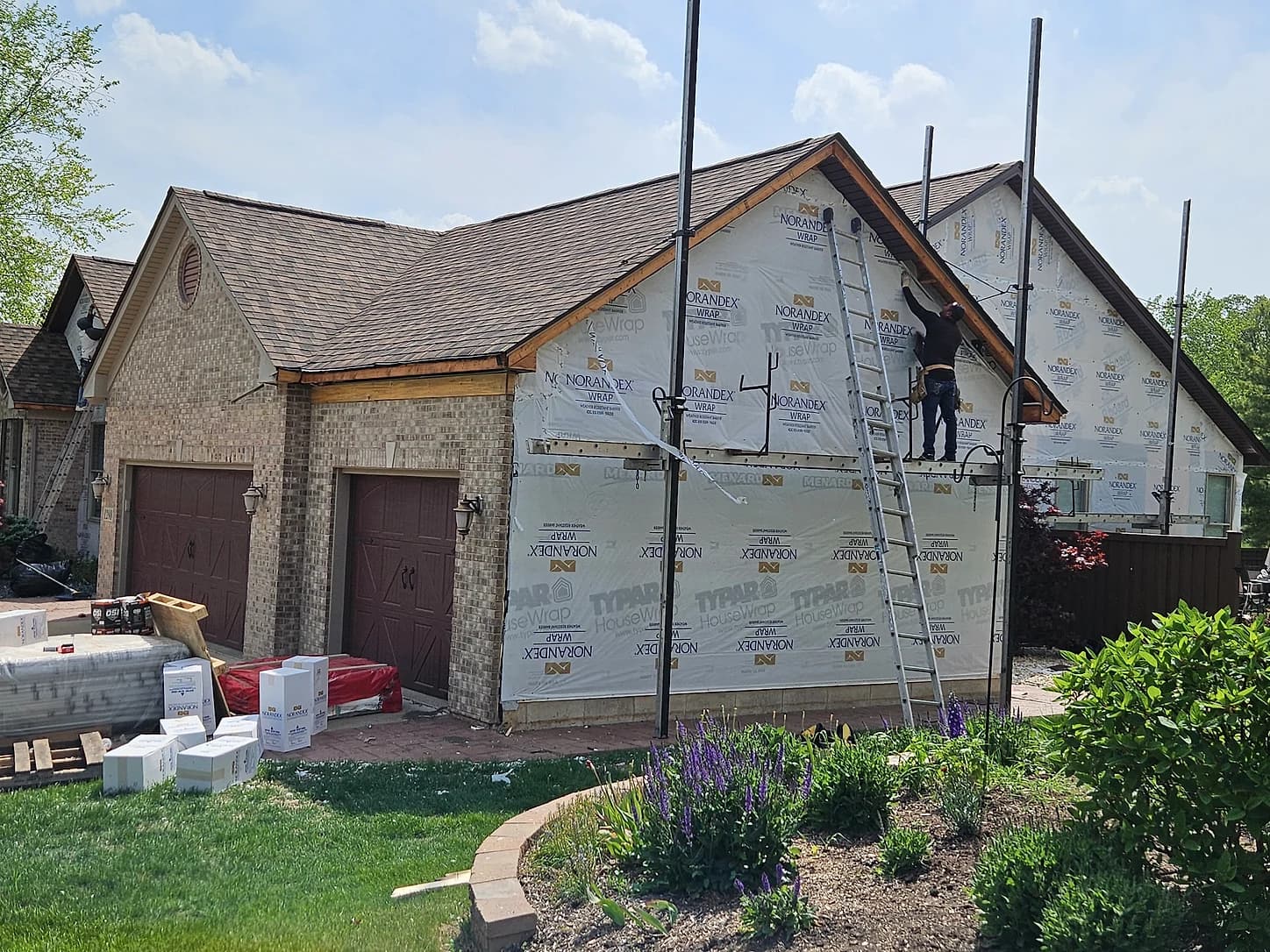
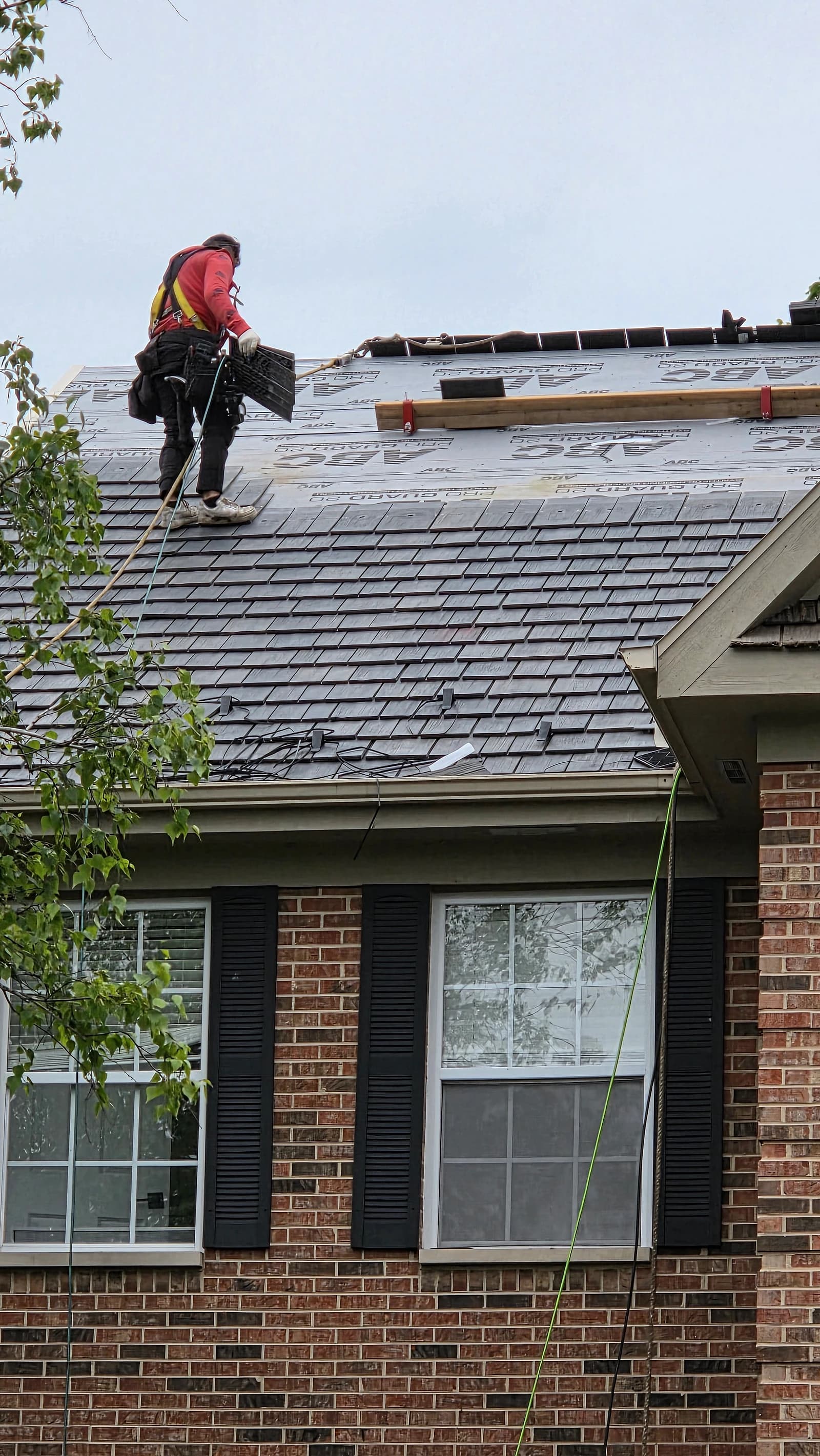
Short version: in most of metro Atlanta, yes, replacing your roof needs a permit, and a crew that skips it is a bigger red flag than most homeowners realize. I pull one on every job, and I want to walk you through what that permit actually buys you, county by county, because it is one of the few pieces of real accountability you get on a roof in a state that does not license roofers.
Start with the thing nobody tells you: Georgia has no state roofing license. Roofing is an exempt specialty trade here. There is no state license number to look up the way you would check a plumber or an electrician. Georgia's contractor-licensing law (O.C.G.A. 43-41) simply leaves roofing off the list of trades it licenses. That surprises people, and it is exactly why the local building permit matters so much. In a state where anybody can print a business card that says roofer, the county permit and the inspection that comes with it are a big part of what separates a real contractor from a truck that followed the storm into town.
What the permit actually is. A re-roof permit is you, or your roofer on your behalf, telling the county you are doing the work, and the county sending an inspector to confirm it was done to code. It is a small fee and a short timeline, and it puts your roof on the public record as permitted work. That record matters more than it sounds, and I will get to why when we talk about selling your house.
County by county, who requires what. Across the north metro the answer is consistent: a full re-roof needs a permit. Cobb County and the cities inside it require a permit and a final inspection on a tear-off and replace. Cherokee and Forsyth are the same. Fulton, DeKalb, and Gwinnett require permits for roof replacement too, with the exact fee and whether the county or your city issues it depending on where you sit. A small repair is sometimes exempt, but a full replacement is not. The fee itself is small, usually in the low hundreds and often tied to the value of the work, which is nothing next to the cost of the roof. When a roofer tells you your job does not need a permit, that is worth a second question, because in this metro a replacement almost always does.
Here is a step most homeowners never take. Cobb, Gwinnett, and Fulton all put their permit records online. You can search your own address and see whether a permit was actually pulled on your roof. Do it after any job. If nothing comes up, the work was not permitted, whatever the crew told you.
What the inspector is actually checking. People picture the inspection as a rubber stamp. It is not. On a re-roof the inspector looks at the things that decide whether your roof survives a Georgia storm season: that the old material came off down to good decking, that any rotten deck boards were replaced, that the drip edge is on and lapped right, that underlayment is where code requires, that flashing is done at walls and penetrations, and that the ridge is vented. The state building code, Georgia's take on the IRC, spells these out, with the reroofing rules in IRC R908. These are the same hidden line items where a cheap job cuts corners. That is the whole point. The permit puts a second set of eyes on the parts you cannot see from the ground, and on the roofer who would rather you never looked.
Why skipping the permit costs you, not the roofer. This is the part that matters. When a crew skips the permit to move faster or shave a fee, the risk lands on you, not them. If the work is bad, there is no inspection on record that caught it. If a future storm claim comes up, an unpermitted roof can complicate it. And a roof that outlives the fly-by-night company that installed it, which is most of them, leaves you holding a warranty from a phone number that stopped answering. The permit is cheap insurance that the work was done to code by someone who expected to be checked.
Put it plainly: the permit is not a favor the roofer does you. It is the county's check on the roofer.
Selling your house is where it comes back around. When you sell, a sharp buyer agent or home inspector can and does check whether major work was permitted. An unpermitted roof replacement can turn into a negotiation problem, a re-inspection, or a price cut at the closing table, sometimes years after the roof went on. A permitted roof is clean paperwork that says the work was done right and recorded. I watched an unpermitted reroof blow up a closing in Roswell once. The buyer's inspector flagged it, the county had no record of the work, and the sellers ate a re-inspection and a price cut a week before they were supposed to move. That is an ugly surprise to inherit for a fee your roofer quietly saved.
What it costs and how long it takes. Most metro building departments set the fee off the value of the work, so on a normal house the permit runs somewhere around a hundred to two hundred dollars. A rounding error next to the roof. The timeline is short, often the same week, and it does not slow a real crew. I fold it into the job and handle the pulling and the inspection scheduling, so you never have to think about it.
The storm-chaser tell. After a big hail storm, out-of-state crews flood the metro chasing insurance money. You know the type: a knock on the door a few days after the storm, an out-of-state plate in the driveway, a price that is good only if you sign tonight. A lot of them skip permits on purpose, because pulling one means handing the county their real information and standing behind the work, and they plan to be three states away by the time your ridge starts leaking. So the permit question doubles as a filter. A roofer who pulls permits, inspects the roof himself, and puts it all in writing is telling you he expects to still be here next year. I wrote out the rest of the red flags in how to vet an Atlanta roofer.
What to do with this. When you collect roofing quotes, ask each one plainly: do you pull the permit, and is it in your price? Get the answer in writing. A real local roofer says yes without hesitating, because pulling permits is just how the job is done right. If you want a roof done on the record, permit pulled, inspected, and handed to you with dated photos and a written scope, book a free inspection and I will walk you through exactly what your county needs and what your roof actually needs. I answer my own phone, and I pull my own permits.