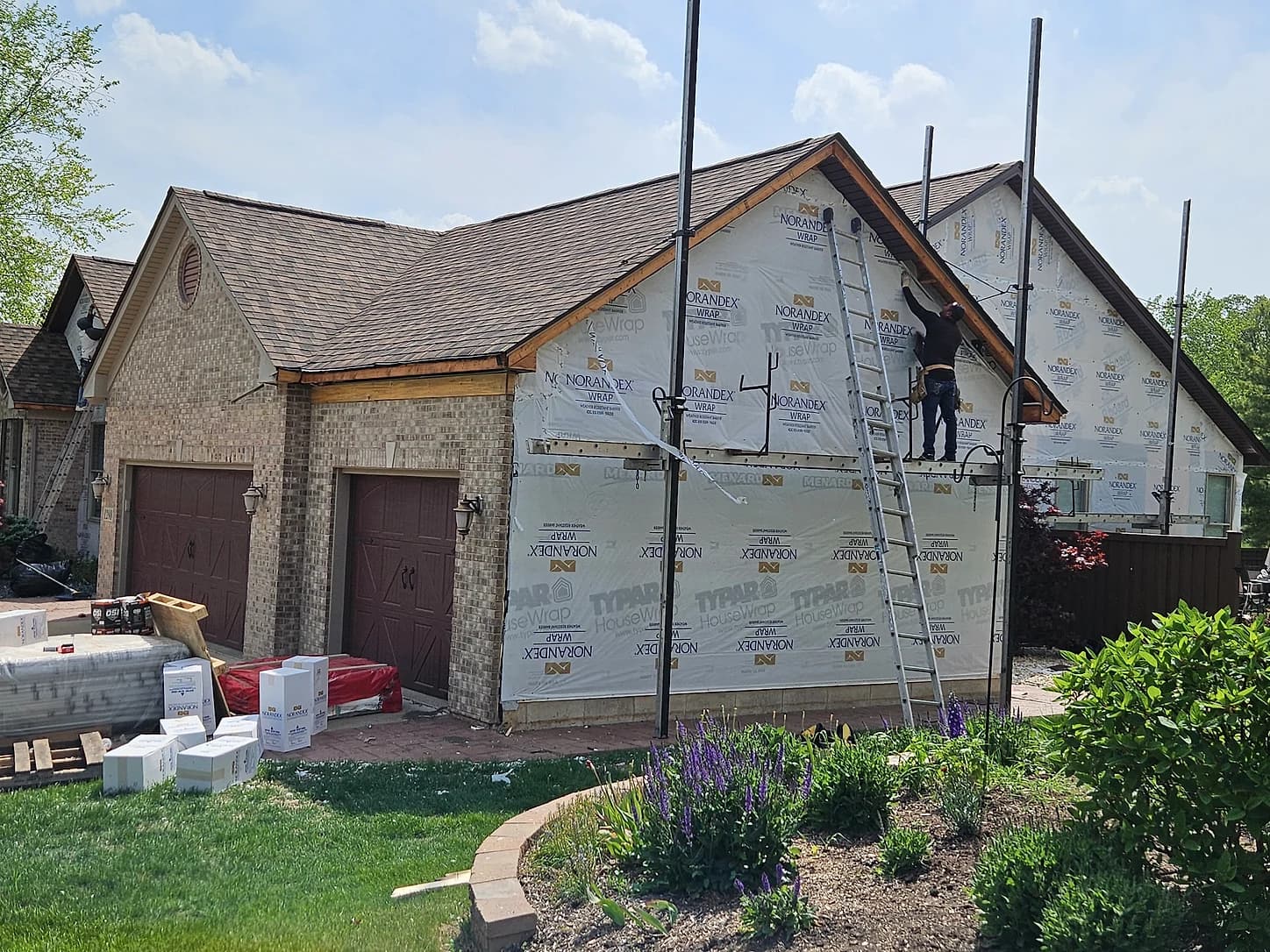
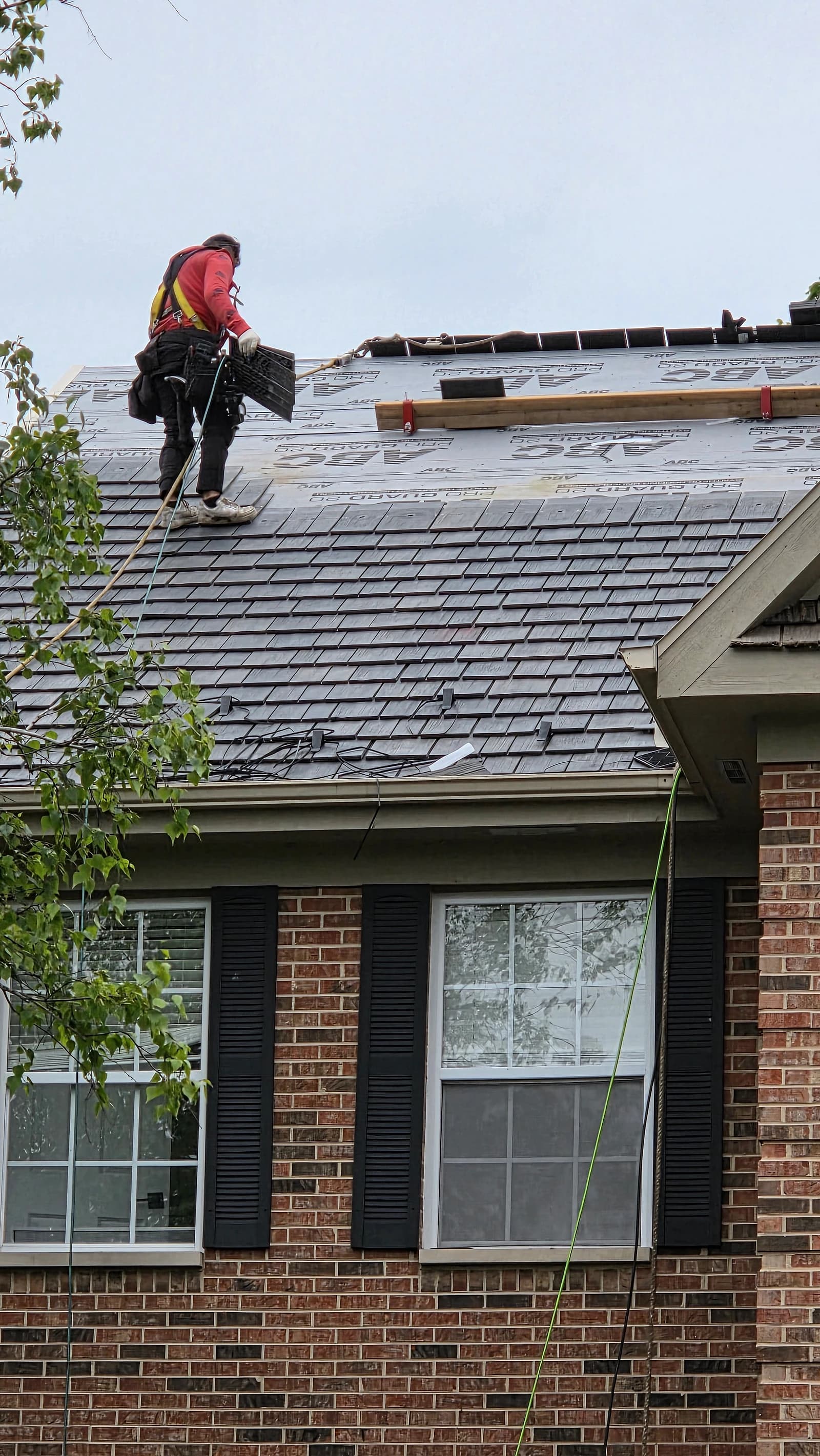
A storm rolls through Cobb or Cherokee, and within a day or two there is a knock at the door. A clipboard, an out-of-state plate at the curb, and a pitch that sounds like a gift: a free roof, and they will cover your deductible so it costs you nothing. If you want to know how to choose a roofing contractor in Atlanta without getting taken, start here, because the first thing almost nobody tells you is the thing that matters most.
There is no such thing as a state roofing license in Georgia. Roofers here are what the state calls exempt specialty contractors, which means the Georgia Attorney General's Consumer Protection Division will tell you plainly that roofers, painters, and drywall contractors are not required to be licensed by the state. So when a yard sign or a door-knocker leads with "licensed and insured," the licensed half is close to meaningless on its own. "Are you licensed" is the wrong first question here. The right questions are the ones below.
To be precise about it, Georgia does require a residential or general contractor license for jobs over $2,500, but roofing specialty work is carved out of that requirement. So a company can be perfectly legitimate and still not hold a contractor license, and a chaser can wave a license from another state that means nothing on your roof in Marietta. The license is not the proof. It never was here.
I came up on the insurance side of these claims before I ran a roofing company, so I have read a lot of roofs the way a carrier's adjuster reads them. That background is the reason I can tell you what the real proof looks like, and why the pitch at your door is built to skip right past it. Let me walk you through what a storm-chaser actually is, and then exactly what to demand instead of a license.
What a storm-chaser is, and why they come to Atlanta. A storm-chaser is an out-of-area crew that follows the hail, signs as many homes as it can in a few weeks, subcontracts the work, and is gone before the next season. They come here because the losses are here. Georgia recorded 134 billion-dollar weather disasters between 1980 and 2024, and 68 of them, more than half, were severe storms. The pace is climbing too: the historical average ran about 3 of those events a year, the last five years ran closer to 10 a year, and 2024 alone hit 13. Chasers follow that trend line. Where the hail falls, the clipboards follow.
That is the whole business model. Sign fast, bill the insurance, move the crew to the next county. The roof they leave behind is somebody else's problem, usually yours, because the warranty is written by a company that will not answer the phone by the time you need it.
The deductible offer is the single clearest red flag. When someone offers to pay, eat, waive, or absorb your deductible, the conversation should be over right there. Georgia made that offer a misdemeanor under O.C.G.A. § 33-23-43(c), which bars anyone from advertising or promising to pay or rebate any portion of an insurance deductible to win the job. Not because the state wants to nickel-and-dime homeowners, but because of what that offer actually does to you.
Here is what that deductible offer really is. Say your deductible is $2,500 and the chaser says he will cover it. Your carrier still gets billed the full repair amount, but your home only got the discounted version of the job. On paper, you signed off on a claim worth more than the work that was done. The inflated claim has your name on it, not the chaser's. He pockets the spread and drives off. If anyone is exposed when that gets audited, it is the homeowner. The "free" part was never free. It was the chaser handing you the risk on the way out the door, which is exactly why the law treats the offer as fraud. Almost no listicle out there explains who is actually left holding it.
Can a roofer negotiate with my insurance company in Georgia? No. Under O.C.G.A. § 10-1-393.12, a residential roofing contractor may not represent or negotiate on your insurance claim, and may not even advertise that they will. That conversation belongs to you and your own carrier, not to the roofer. So when a chaser says "we will handle your whole claim," that is not a service. That is them describing something a Georgia roofer is flatly not allowed to do. The honest version sounds different: we document the damage in writing, with dated photos, and you take that to your insurer. You stay in the driver's seat with your carrier the entire time.
The 5-business-day window you probably did not know you had. That same statute, § 10-1-393.12, gives you a right to cancel a roofing contract within five business days after your insurer notifies you in writing that the claim, or part of it, is not covered. And the contractor cannot make you pay anything until that five-day window has closed. So if someone is pushing you to sign and pay on the spot, in your driveway, the day after a storm, they are pushing against a protection the state wrote specifically for you.
Under SB 201, effective July 1, 2025, Georgia tightened the screws further. Within a year of a declared natural disaster, it is illegal for a contractor to take your job and then fail to actually start the work within that year, to do substandard work, or to use a contract that signs your insurance proceeds over to them. That last protection matters: if a contract hands your insurance money directly to the roofer, that is a chaser's contract, and now it is against the law. Read what you sign.
So if the license is not the proof, what do you actually demand? Five things, and you can check every one of them before you let a crew on your roof.
One, a certificate of insurance you can verify by phone. Ask for a certificate of insurance showing general liability and workers' compensation, then call the insurer listed on it and confirm the policy is active today. Industry guidance puts the liability floor around $500,000, with $1 million the comfortable number for a residential replacement. If the crew gets hurt on your roof and there is no workers' comp, that can land on your homeowner's policy. This one is not optional.
Two, a permit pulled in their name, not yours. A real roof replacement in metro Atlanta gets pulled under a county or city building permit. The county permit is the closest thing Georgia has to a local credential, so confirm the contractor pulls it in the company's name. If they ask you to pull the permit yourself, that is them shifting the liability onto you, and it tells you what kind of company you are dealing with.
Three, a manufacturer certification you can confirm at the source. A credential like GAF Master Elite is held by only about 2 to 3 percent of roofing contractors in the country, and it is the kind of signal that does the work the missing state license cannot. You do not have to take the contractor's word for it either. You can verify a contractor's standing directly on the manufacturer's site. A real credential survives a five-minute check.
Four, local references in your own suburb. Not a national review average, actual addresses in Kennesaw or Woodstock or Roswell where this company put on a roof and the homeowner would talk to you. A crew that has worked your area for years can hand those over without flinching. A crew that rolled in last week cannot.
Five, a written, itemized estimate. Tear-off, underlayment, flashing, the shingle line and its wind rating, ventilation, cleanup, the permit, and the warranty, each on its own line. "As needed" and a single lump-sum number are where the hidden charges hide. If a roofer will not put it in writing, line by line, you already have your answer.
Should you let a roofer inspect your roof for free after a storm? A free look is fine. The catch is what they do with it. A chaser will chalk-circle a few granule spots and announce your roof is totaled. I have stood in a lot of those same driveways the week after, and half the time what got circled is the cosmetic granule loss and blistering you get from years of Atlanta heat baking an asphalt roof, not storm damage at all. There is a real difference between damage and age on a fifteen-year-old Cobb County roof, and a real inspection tells you which one you are looking at, in writing, with photos you keep.
A fair quote versus a bid that is too good. A roof replacement on a typical Atlanta home runs roughly $8,000 to $15,000, somewhere around $3.50 to $5.50 a square foot installed for standard architectural shingles. So when a bid comes in dramatically under that, it is not a deal. It is a number that only works if the crew cuts what you cannot see from the ground: the underlayment, the flashing, the nailing pattern. The lowest bid in the driveway is very often the chaser's bid, and you pay the difference later, on a roof that fails early.
How I would vet a roofer if it were my own mother's house in Marietta. I would skip the word "licensed" entirely, because it proves nothing here. I would ask for the certificate of insurance and call the carrier myself. I would confirm the permit gets pulled in their name. I would ask for three addresses down the road I could drive past. I would read every line of the contract and walk the second anyone offered to cover my deductible. And I would want to know, before anything else, whether the person quoting the roof is the same person who will stand on it.
That last one is the whole thing, and it is why the person who quotes your roof at DJK is the owner, not a salesman who disappears the day after you sign. The reasons are in why the person who quotes the roof should be the person who builds it.
The roof outlives the salesman. Vet for the company that will still pick up the phone in five years, the one that pulls the permit, documents the damage, and lets you work with your own carrier the way the law intends. If you want a straight, documented look at your roof with no clipboard pitch and no deductible games, talk to a local Atlanta roofing company that pulls the permit and stands behind the work. I will tell you what I see up there, honestly, and put it in writing either way.