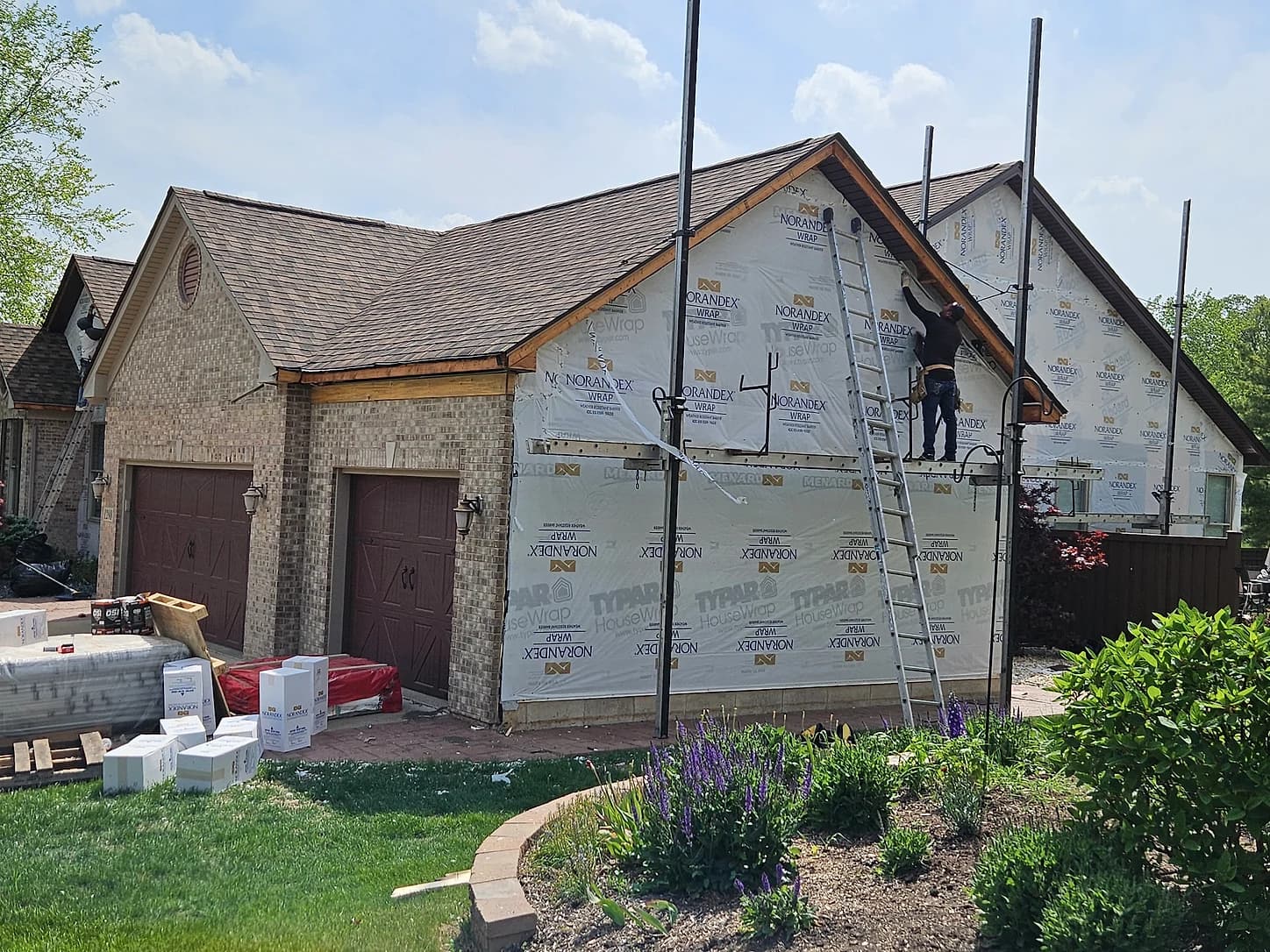
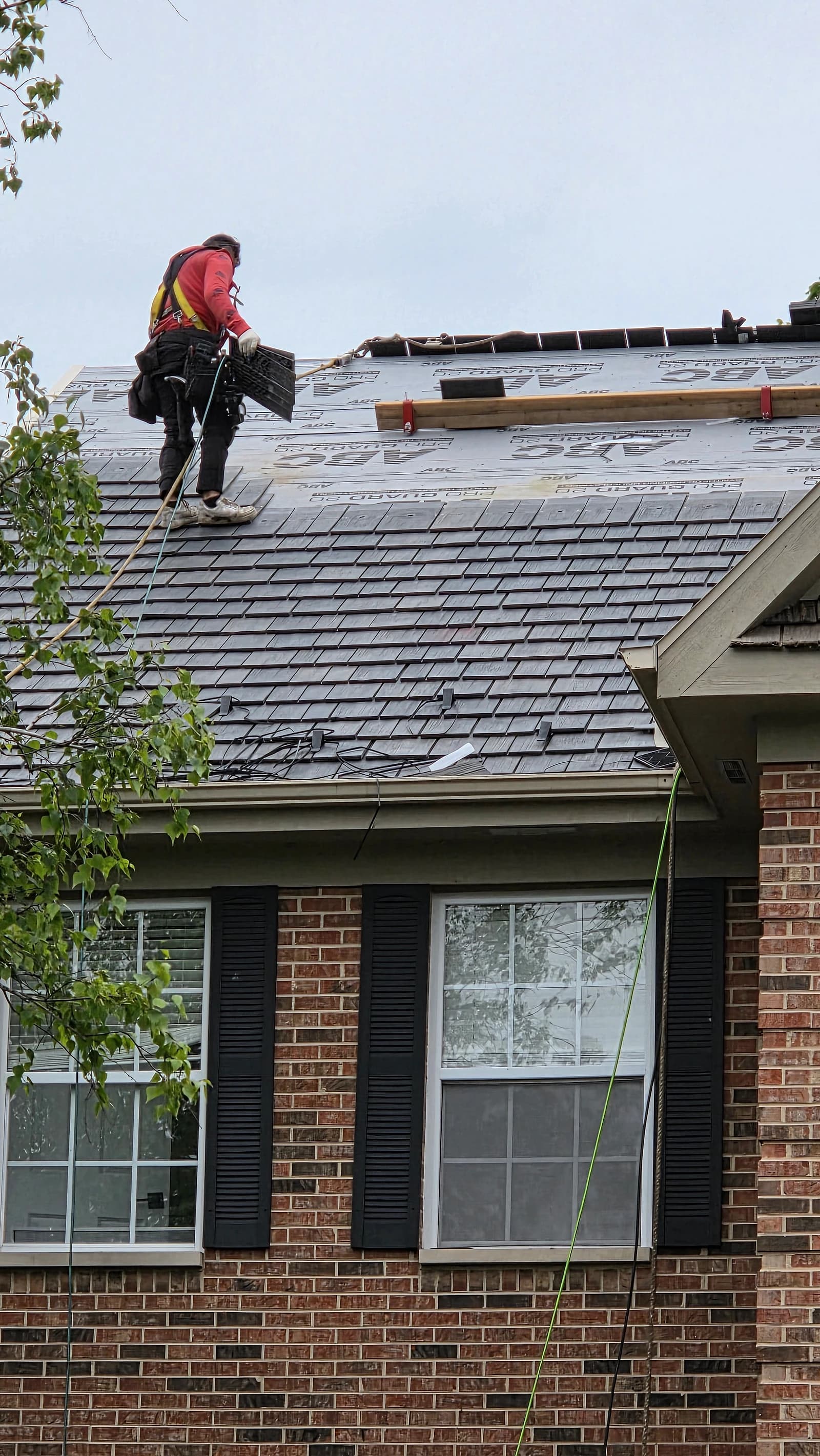
If your attic is too hot in Atlanta, your roof ventilation is almost always the reason, and it is rarely the reason people think. I climbed into an attic in Kennesaw last July. The thermostat outside read 91. The attic read 138. The homeowner's AC was running nonstop and the upstairs still would not drop below 78. The roof itself was fine. The air the roof could not move was the whole problem.
I want to walk you through what an overheated Atlanta attic actually does to a shingle, and why the usual advice (add more vents) often makes a hot attic worse instead of better. The fix is balance, not parts. Once you see that, the rest of this makes sense.
How hot an Atlanta attic actually gets. Around here the heat is not a one-week event, it is the whole season. The average daily high runs 87 in June, 90 in July, and 89 in August, per the 1991 to 2020 NOAA climate normals. The National Weather Service office in Peachtree City counts 30 to 60 days a year at 90 degrees or hotter across north and central Georgia. That is the load sitting on your roof for months.
An attic does not just match the outside air, it stacks heat on top of it. A poorly vented attic on a hot day commonly runs past 130 degrees and can push over 150. I have put a thermometer up there on plenty of August afternoons, and the number always surprises homeowners. So when people ask me how hot an attic gets in summer, the honest answer for Atlanta is 130 and up, well above whatever it says on your porch.
That heat is not just uncomfortable, it ages the roof from the inside. Asphalt shingles depend on oils and volatiles that keep them flexible. Bake them long enough and those volatiles cook off, the asphalt gets brittle, and the shingles blister, curl, and crack years before they should. I pulled up on a 14-year-old roof in Marietta where the south-facing slope was curled and cracking while the shaded north slope still looked almost new. Same roof, same install, same shingles. The south side just cooked longer. Ventilation is one of the biggest factors in how long your roof lasts.
The one rule most people get wrong: intake and exhaust have to balance. Here is the part the national blogs skip. A roof breathes like a body. Cool air comes in low at the soffits along the eaves, picks up heat as it rises, and leaves high at the ridge. If air cannot get in at the bottom, nothing useful happens at the top, no matter how many vents you cut.
The manufacturer and association guidance is blunt about this. The Asphalt Roofing Manufacturers Association says intake should match exhaust, and if you cannot get a perfect match, you favor more intake than exhaust. The exhaust at your ridge should never be greater than the intake at your soffits. Get that backwards and the attic actually pulls air from the wrong places.
So can too much attic ventilation be a problem? Yes, but not the way people fear. The issue is almost never too much total vent area. It is too much exhaust relative to intake. When the exhaust up top outweighs the intake down low, the roof starts sucking air through whatever gap is closest, often a gable vent or even gaps around the attic hatch, and the soffit-to-ridge path you actually want never gets going. The attic stays hot. That single reframe, balance over parts, is what separates a roof that runs cool from one that bakes.
How much ventilation your attic needs, plainly. Here is the snippet version. The International Residential Code (R806.2) sets the baseline at 1 square foot of net free vent area for every 150 square feet of attic floor. You can drop to 1 square foot per 300 square feet only if you split it right: 40 to 50 percent of the vent area has to sit in the upper part of the attic, within 3 feet of the ridge, with the rest down low at the soffits. That balanced split is the whole reason the looser ratio is allowed.
Put numbers on it. A 1,500 square foot attic at the 1/150 rule needs about 10 square feet of net free area total, split between intake at the soffits and exhaust at the ridge. Net free area is the actual open airflow space in a vent, not its outside size, and it is printed on the product. That is the figure that matters, not how many vents you can count from the driveway.
Ridge vent vs box vent, and what I install. On most Atlanta homes I run a continuous ridge vent paired with continuous soffit intake. A ridge vent exhausts along the entire peak, so the whole attic drains evenly. A GAF Cobra Rigid Vent 3 gives about 18 square inches of net free area per linear foot, and an Owens Corning VentSure runs around 20 per foot, so a long ridge moves a lot of air.
Box vents, the little square humps you see dotted across a roof, each only serve roughly 150 square feet of attic. To match one good ridge run you would need a row of them, and they still only pull from their own small zone. Is a ridge vent better than a box vent? For most pitched Atlanta roofs, yes, because it exhausts the whole ridge line instead of a few spots. Box vents earn their place on cut-up roofs with short or broken ridge lines where a continuous vent will not fit.
Why mixing vent types backfires. Can you mix a ridge vent with attic fans or a row of box vents? Usually you should not. This is where good intentions go sideways. I worked on a roof that had a ridge vent, four box vents, and a powered attic fan, all at once. Three exhaust systems fighting each other, and the attic was still an oven. A powered fan or a box vent will pull the easiest air it can find, which is the cooler exhaust coming out of the nearby ridge or box vent, not the hot air down at the far soffits. The systems short-circuit each other and the soffit air you actually need barely moves. I took out the redundant exhaust, made sure intake was open, and the attic finally started to breathe.
The most common real cause: a soffit vent blocked by insulation. When an attic runs hot, the first place I look is not the ridge, it is the eaves. The most common mistake homeowners make when installing insulation is blocking the airflow at the eaves, and ENERGY STAR is direct about it: you should never cover your attic soffit vents with insulation. A soffit vent blocked by insulation is the quiet killer of attic airflow, and it is everywhere up here.
I opened up a Roswell attic where the owner thought he had solved his heat problem by adding box vents. But insulation was packed solid over every soffit. No air could get in at the eaves, so the new exhaust had nothing to draw. The fix was not more vents. We pulled the insulation back off the soffits and set rafter baffles to hold the channel open. No new holes in the roof, and the attic temperature dropped.
So if you are wondering how to tell whether your attic has poor ventilation, the tells are simple. A hot upstairs that the AC cannot keep up with in summer. Power bills that climb harder than your neighbors'. In winter, frost or a damp, musty smell up in the attic. Dark staining or a mold sheen on the underside of the roof deck. Rusty nail points poking through the sheathing. I have seen rusty nail points and a dark mold sheen on the decking of a poorly vented Woodstock attic, and that is moisture, not just heat, telling you the air is dead up there.
What good ventilation actually buys you. Two real things: a lower power bill and a longer roof. On the energy side, ENERGY STAR reports that sealing and properly ventilating your attic can save up to 15 percent on annual energy costs. In an Atlanta summer, that is the cheapest cooling upgrade most homes have, and it is air they already lost.
On the roof side, ventilation protects the shingles you paid for. ENERGY STAR notes that good attic airflow moves super-heated air out and carries moisture with it, which is exactly what keeps shingles from cooking early. There is a warranty angle too. Manufacturers write minimum ventilation into their shingle warranties, and inadequate ventilation with overheating damage is a documented reason a warranty claim gets denied. So poor ventilation can quietly cost you the coverage you paid for on the roof itself, on top of the early aging.
When to handle it yourself and when to call. Some of this is DIY. Pulling insulation back off a blocked soffit and setting rafter baffles is a Saturday job if you are comfortable in your attic and careful about where you step. Clearing the eaves is the highest-impact, lowest-cost thing most homeowners can do themselves.
Cutting a new ridge vent, adding soffit vents, or rebalancing a roof that has three exhaust systems fighting each other is roof work, and it should be measured before anyone starts cutting. In Georgia, residential work over $2,500 calls for a licensed contractor under state law (O.C.G.A. Title 43, Chapter 41), and ventilation work that touches the roof deck is the kind of job where the net free area should be measured against the attic size before the first hole goes in. That is the difference between fixing the airflow and just adding more holes.
Before you go shopping for a bigger AC, send someone into your attic with a thermometer first. In Atlanta, the cheapest cooling upgrade most homes have is the airflow they already lost. If your upstairs is hot and your bills keep climbing, get a local Atlanta roofer who actually goes in the attic to check intake, exhaust, and the actual attic temperature before you spend a dime on anything else. Don checks all three on every inspection. Book a free Atlanta roof and ventilation check, and we will tell you straight whether your attic is breathing or baking.