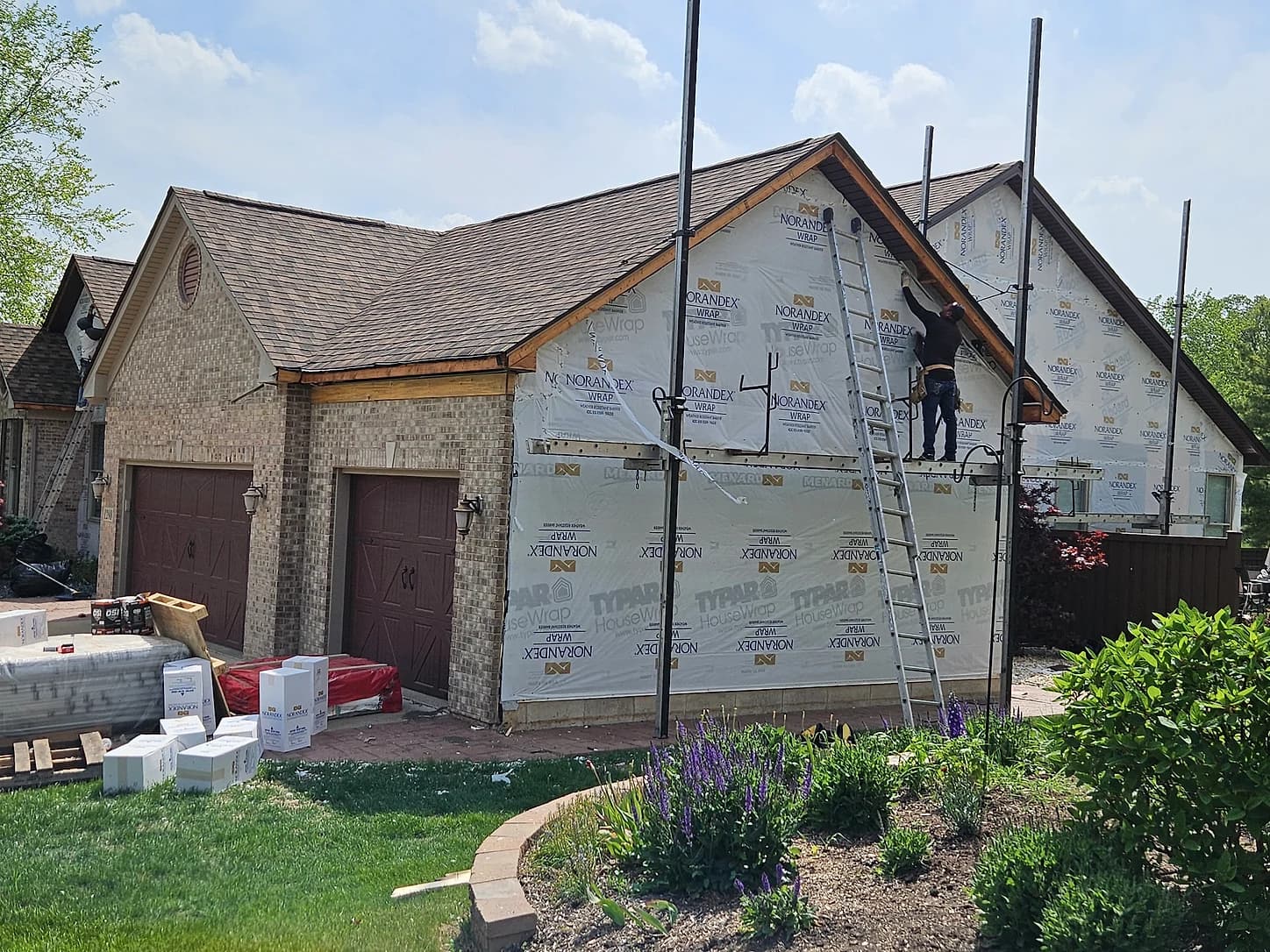
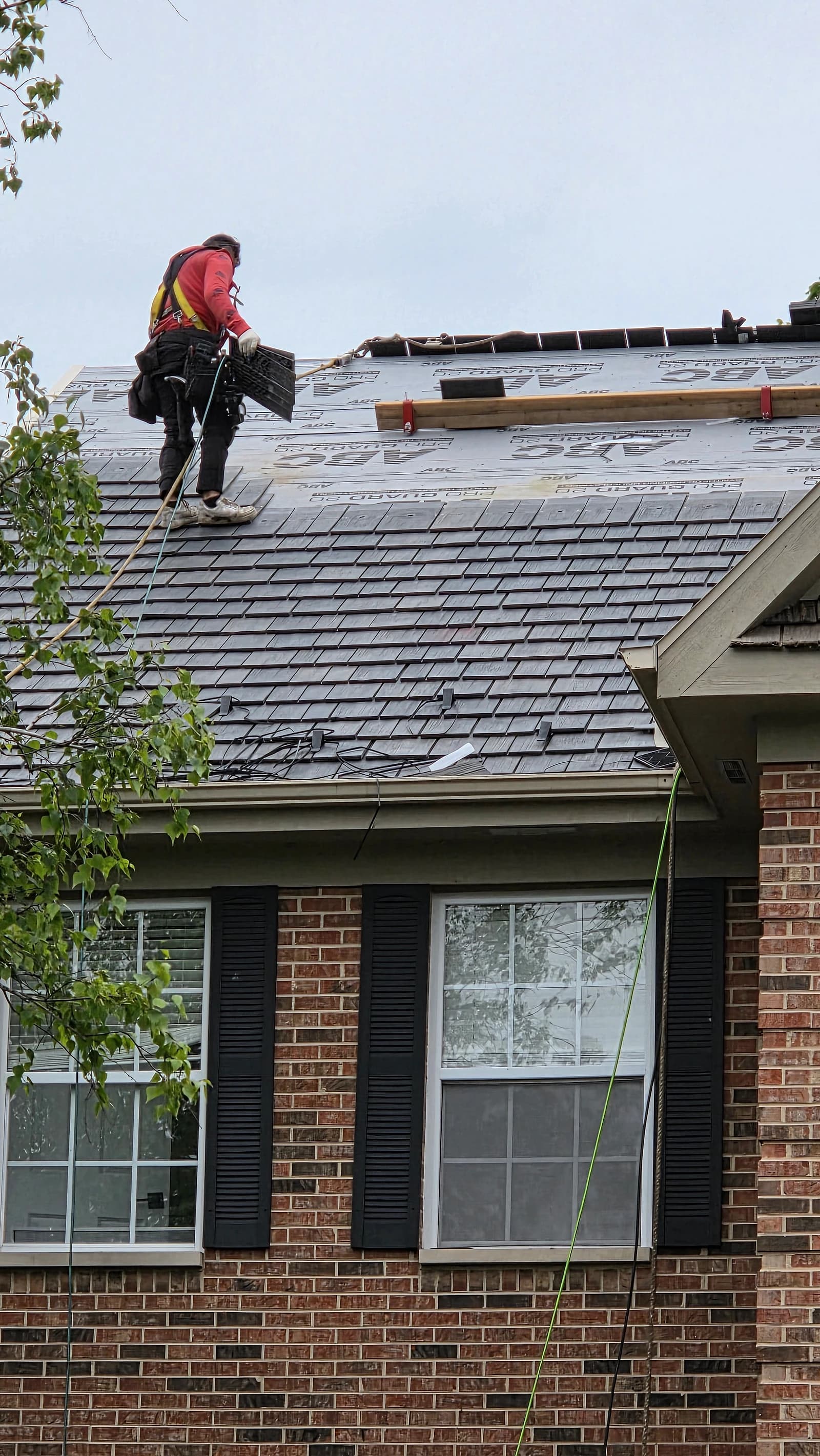
Two estimates on the same North Atlanta roof can differ by thousands of dollars, and the difference is rarely the shingles. It is the dozen smaller roof insurance line items that make a roof a roof. After five years working claims on the insurance side, I learned which of those items a first estimate drops most often. Here are the ones that go missing, what each one typically adds back, and why a low first number is usually a documentation problem, not the final word. If your estimate already came in light, the companion read is why a first supplement check can land low.
Drip edge. This is the metal flashing along the eaves and rakes that sends water into the gutter instead of behind it and down the fascia. People search 'does insurance pay for drip edge' because it is one of the first items left off a fast estimate, and the answer is that it belongs on the scope. Georgia's adopted building code treats drip edge as required on a new shingle roof, so a documented estimate should show it as its own line rather than fold it into the shingle price. On a typical North Atlanta roof, edge metal runs roughly a couple of dollars per linear foot installed, which adds up fast once you measure every eave and rake. If you want to see how edge metal ties into water control, read how gutters and fascia move water off the roof.
Ice-and-water shield. The self-sealing membrane along the eaves and in the valleys that guards against wind-driven rain backing up under the shingles. A lot of older homes around Cobb, Cherokee, Forsyth, and north Fulton never had it, and current code often calls for it now. On a Marietta tear-off last spring, the original roof had bare felt in the valleys where the leak started, so the corrected scope had to add ice-and-water shield the first estimate left off entirely. When code requires an upgrade the old roof did not have, that added cost is generally covered, but only when the requirement is written down and the photos back it up. Figure on the order of a couple of dollars per square foot in the covered areas. This is exactly the kind of item a hurried scope skips.
Starter strip and ridge cap. The purpose-made shingles at the eaves and along the ridges and hips. They are not the same as cutting up field shingles, and they carry their own per-foot cost, usually a few dollars a linear foot once you count both the starter course and the ridge run. First estimates routinely count the field and forget the edges, which quietly shrinks the number. For how shingle types and components differ, the shingle material guide walks through it.
Ridge vent. If the old roof had a continuous ridge vent and the estimate only pays to put shingles back, the ventilation got dropped. Replacing ridge vent on a new roof tends to run a few dollars per linear foot of ridge, and skipping it bakes the new shingles from underneath and shortens their life. I have had to add this back on plenty of North Atlanta roofs where the first scope quietly turned a vented ridge into a plain one.
Flashing, pipe boots, and valley metal. The pieces that seal every penetration and every transition where two roof planes meet. They wear out on the same clock as the shingles and should be replaced with the roof rather than reused, and each one is its own line item, commonly in the range of twenty to fifty dollars apiece for boots and step flashing, more for long valleys. Reusing a brittle ten-year-old pipe boot on a brand-new roof is how a fresh roof starts leaking in year two.
Overhead and profit. When a job is involved enough to need a general contractor coordinating several trades, an allowance for overhead and profit is a normal part of a complete estimate, and the long-standing industry norm is roughly ten percent overhead and ten percent profit, about twenty percent on the qualifying portion of the job. People type 'overhead and profit roof insurance claim' because carriers do not always add it on their own. Whether a given job qualifies is a question the documentation answers: the number of trades, the complexity, and the scope all go in writing so the file speaks for itself.
Matching. If a repair cannot match the existing material because the shingle is discontinued or the color has faded, the mismatch becomes a real question rather than something to paper over with a visibly two-tone roof. Georgia does not force a uniform-appearance result the way some states spell out, so whether matching applies on your roof comes down to your policy language and documented photos of the existing material, not an automatic line. The decision still sits with you and your insurer.
None of these are tricks. They are the real, code-referenced, manufacturer-specified components of a correctly built roof. The reason they go missing is that catching them takes someone who knows the scope cold and photographs every piece. That is the part we do on every roof: document the components the roof actually needs and put each one on paper with a photo behind it. It is why the owner writes the quote rather than a rep. You work with your insurer on the claim itself. We document the roof and do the work. The same components cut the other way at the end of a claim too, which is why a thin scope can cost you the recoverable depreciation if the deadline slips.
If your first estimate feels light, the issue is usually a thin scope, not a final answer. It helps to know how ACV and RCV change what a corrected scope puts back before you accept a number. The honest next step is a free inspection where I document the full roof, line by line, so nothing real gets left off. When you are ready, reach out to our North Atlanta roofing team and we will get on the roof.