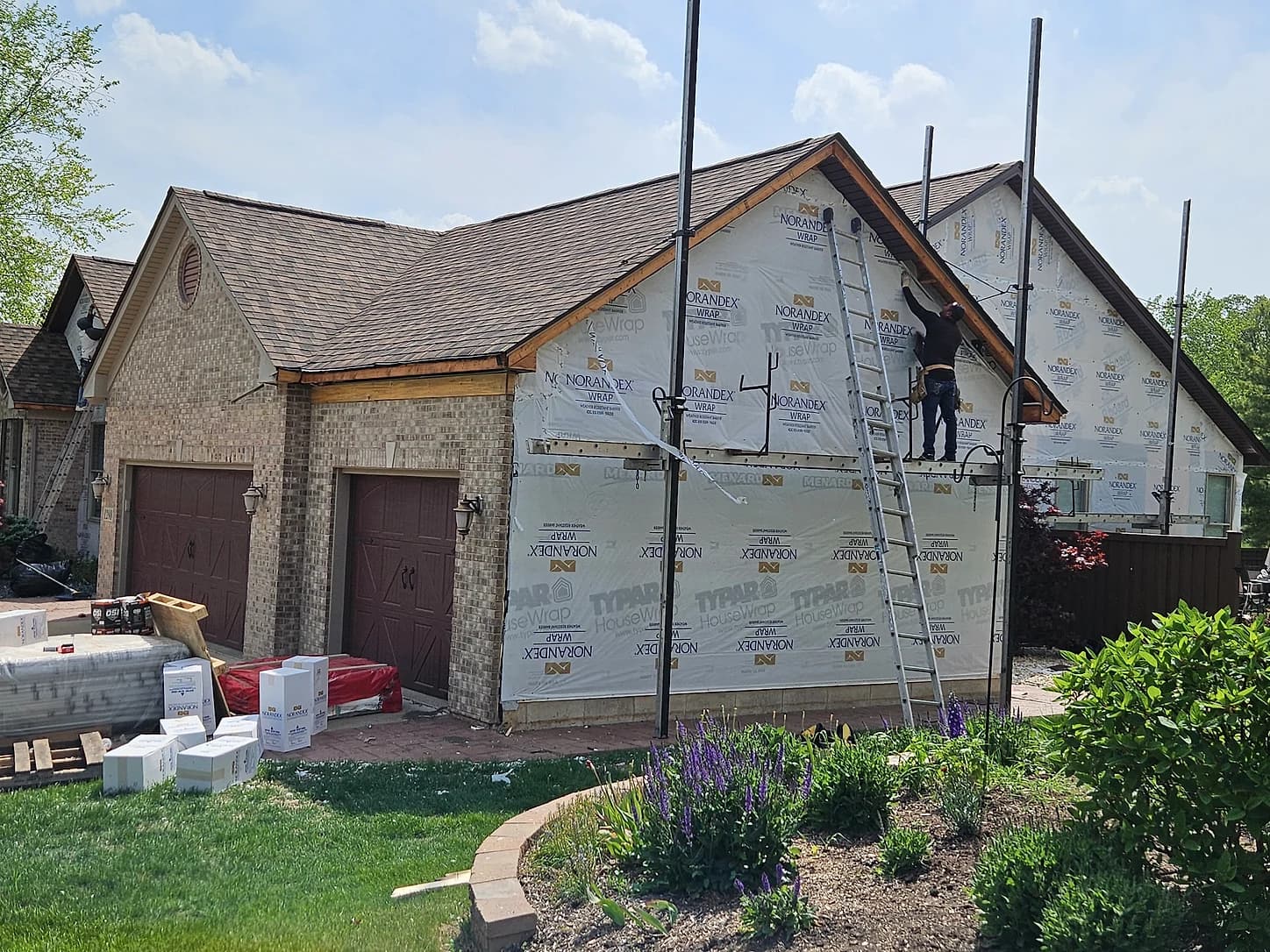
There is one question I get on almost every roof, usually shouted up from the driveway while my crew is still working: should I replace my gutters with a new roof too? The honest version is that sometimes you should and sometimes you should not, and the way to tell has less to do with the gutters than with the cheap strip of metal hiding underneath them.
Start with the short answer, because most homeowners want it before the lecture. If your gutters are one-piece aluminum, less than about fifteen years old, still hanging level, and not leaking at the seams, a good crew works around them and you keep them. Replace them when they sag, pull away from the fascia, leak at the corners, or sit packed with shingle granules. That is it. If a contractor tells you every roof needs new gutters, he is selling, not inspecting.
The reason any of this matters is that your roof and your gutters are one water system, not two line items. The roof sheds the water, the drip edge hands it off, the gutter catches it, and the downspout carries it away from the house. Break any link in that chain and the water goes somewhere it should not, almost always behind the fascia where you cannot see it until the repair is no longer about gutters at all.
Atlanta does not get gentle rain, and that changes how I size everything. We average around fifty inches a year here, more total than Seattle, which sits near thirty-seven. But the yearly total is not what floods a gutter. The intensity is. Pull the NOAA Atlas 14 numbers for the Atlanta point and a sixty-minute storm runs about 2.57 inches per hour at the two-year level and 4.99 at the ten-year level. Shorter bursts are worse. At the ten-year level a fifteen-minute stretch hits 8.55 inches per hour, a thirty-minute window 6.95, and a five-minute cloudburst can touch 11.7. Those are measured numbers for our zip codes, not a national average. That is the load your gutters have to move off the roof in a hurry, and it is why sizing is not a detail you wave off.
So, five-inch or six-inch gutters, and what size do you need for heavy rain like ours? A standard five-inch K-style gutter holds about 1.2 gallons of water per foot. A six-inch holds about 2.0, roughly sixty-seven percent more capacity from one extra inch of width. The downspout math is starker. A five-inch gutter drains around 600 square feet of roof per downspout. A six-inch with the larger three-by-four downspout drains about 1,200, double the area. On a small one-story ranch, five-inch is plenty and I will tell you so. On a big two-story with a steep roof dumping water onto a short run, the six-inch earns its keep. I put six-inch on an Alpharetta two-story last summer for exactly that reason, after the owner watched five-inch gutters sheet water over the front edge in every hard rain. There is more in our gutter guide.
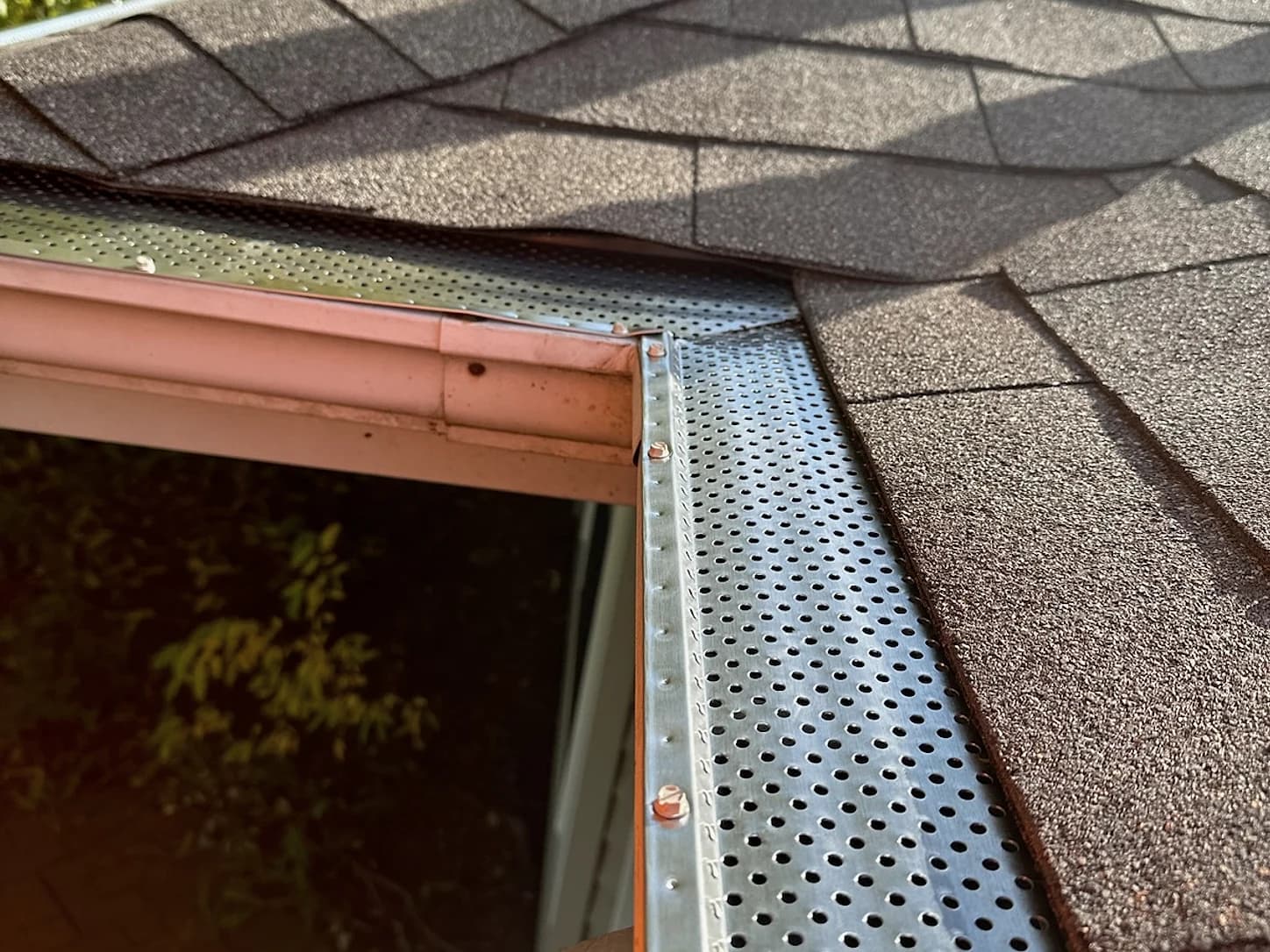
Here is the part most homeowners never hear: the gutter is not what keeps water off your fascia. The drip edge is. Drip edge is the L-shaped strip of metal along the eaves and rakes that catches the water coming off the shingles and throws it forward into the gutter. Installed right, the fascia stays dry. When it is missing, or someone nailed it on upside down, or there is a gap, water runs back behind the fascia board on every single rain. The number one cause of fascia rot is not old wood, it is water from a clogged gutter or a bad drip edge wrapping back onto the board and keeping its face wet for days.
Wood that stays wet rots. That is the whole mechanism, and it is why fascia rot repair so often turns into something bigger. The water that soaks the fascia drips to the soffit, the panel under your eave, and a soffit with water damage near the roof line is a sign the trouble started above it. From there the water can reach the rafter tail, the end of the framing member the whole edge of your roof hangs on. A wet fascia is a board. A wet rafter tail is structure, and you do not want to find it the way I sometimes do, with a tear-off already underway.
This is what I find when I pull old gutters down, and it is the reason I want to look before the roof goes on. I took a twenty-year-old gutter off a house and the fascia behind it was soft enough to push my thumb through, the trough underneath packed with shingle granules. That granule load is the old roof shedding its own protective grit into the gutter, and it tells me how worn the shingles were and why the water stopped draining the way it should. None of that shows from the driveway. You only see it when the gutter comes off, which on a roof job is exactly the moment it does.
A fair question while a crew is up there: can roofers damage gutters during a roof replacement? They can, yes. A careless crew dents the front lip with a ladder, drops tear-off debris into the trough, or bends a hanger reaching for the edge. A crew that respects the system pads the ladder, tarps the gutters during tear-off, and clears the troughs before they leave. When I keep your existing gutters, I treat them like they are staying. Ask any contractor how he protects the gutters he is not replacing. The answer tells you a lot.
This is also why doing the gutters with the roof, when they do need replacing, is the one moment the whole edge gets built as a single detail. New underlayment, new drip edge, and new gutters go on in the right order, layered so the water has one clean path from shingle to ground. Do them separately and you get two trades meeting at a seam, the gutter installer working off a drip edge he did not set, hoping the last guy got it right. Code backs the detail: drip edge is required at the eaves and rakes, lapped and fastened at set intervals (IRC R905.2.8.5), with the underlayment running over it at the eaves and under it at the rakes. Several metro Atlanta counties inspect the roof edge on a reroof, not just the shingles, so this is not optional. One crew, one mobilization, one accountable contractor for the whole edge.
What does it actually cost in metro Atlanta? One-piece aluminum gutters here run roughly $5.90 to $10.30 per linear foot installed, and stepping up to six-inch adds about fifty cents to a dollar a foot. If you are replacing rather than starting fresh, add another dollar or two a foot to tear the old ones off and haul them away. A real six-inch job I did in Dunwoody, about 200 feet, came to around $2,100, near $10.50 a foot. Folded into a roof job, new gutters typically add $1,200 to $2,500. Real numbers, not a national guess.
One more thing worth knowing before you let anyone on your roof. Georgia does not issue a standalone roofing license, which trips people up, because roofing is treated as a specialty trade. But any contractor doing residential work valued at $2,500 or more must hold a Georgia Residential-Basic or Light-Commercial Contractor license from the state board. So do not ask for a roofing license that does not exist. Ask for the actual state contractor license and verify it. The metro counties also require a permit for a full tear-off and replacement, though small repairs are often exempt. A contractor who pulls the permit and welcomes the inspection is one who expects to pass it.
The same water that rots a fascia board goes after your siding too, so if the roof job has you looking at the whole envelope, our guide on how a wall holds up to the same water walks through which siding takes it best.
So back to the question from the driveway. If your gutters are sound, keep them and save the money. If they sag, leak, or rattle with granules, replace them with the roof so the edge gets built as one piece. Either way, the part that decides whether your fascia survives is the drip edge underneath, and that is the thing we want eyes on. We will tell you straight whether your gutters have life left or whether one more inch of width and a proper drip edge would save you a structural repair down the road. If you have a roof job coming, book a free inspection and have me look at the gutters and the edge the same day, before the damage moves to the part you cannot see. You will get an honest read, not a sales pitch.