A salesman knocks the week after a north-metro hail storm. Friendly, fast, has a tablet, says he spotted damage from the street. Here is the one question that decides almost everything, and almost nobody asks it. Will the person quoting my roof be the same company that builds it, and will he still answer the phone in two years? For most companies the honest answer is no, and that gap is the whole reason an owner operated roofer in Atlanta is worth finding before you sign anything.
I am Don. I write every quote DJK gives, I sign every contract, and I answer my own phone. Same person, start to finish, in Cobb, Cherokee, and north Fulton. That is not how most of the industry works, and once you see how it does work, the salesman at your door looks different.
The part of a roof quote nobody explains to you. When a crew of three knocks your street after a storm, the man with the tablet is usually a sales rep, not a roofer. Roofing salespeople typically earn 7 to 12 percent of the contract as commission, 8 to 10 percent being common. On a $14,000 roof that is roughly $1,120 to $1,680 going to the person who knocked, before a single shingle is bought. Company overhead adds another 10 to 15 percent for the office and the marketing that put him on your porch. None of that is illegal or even unusual. It just means the friendly guy is paid to close today, on your signature, not on a roof that still holds in twenty-five years.
What owner-operated actually means, and what it does not. It does not mean a yard sign that says family owned. Anybody can print that. It means the same person prices the roof, signs the contract, and picks up the phone when you call two years later. I answer my own phone, and my name is on the contract if the roof fails. A sales org spreads that across four people who each touch your job once and move on, and the closer who quoted it has usually never built one.
Why the salesmen show up in March, and don't tell you they're from out of state. Here is the mechanism the warning lists never name. Georgia's hail season peaks in March, April, and May, with a smaller second wave in September and October. North metro Atlanta gets hit with hail year after year, and the radar picks up far more of it than the storms that actually make the news. Hail drives a wave of insurance claims, that wave is a market of easy doors, and the door-knockers follow the storm into the metro because that is where the volume is. A lot of them are not from here.
The Georgia Attorney General's office warns that storm chasers use aggressive, misleading tactics, are usually out of state, have no local office, and vanish after the job. The state tells you to verify a business license, liability and workers-comp insurance, local references, and written warranties before you sign. If a roofer offers to pay or absorb your deductible to win the work, walk away. That is illegal in Georgia and treated as insurance fraud, so the offer itself tells you who you are dealing with. Worth knowing the red flags of a storm-chaser roofer before the next storm rolls through.
Does Georgia even require a roofing license? Most homeowners guess wrong here. Georgia has no standalone roofing license, so a guy with a magnet sign on his truck can call himself a roofer. What the state does require is a residential or general contractor license for any job costing $2,500 or more, under O.C.G.A. section 43-41, and a full re-roof clears that threshold every time. So the question is not whether someone is a licensed roofer, because that title does not exist here. The question is whether the company holds the contractor license the law requires and pulls the county permit. Ask for both. A real roofer hands them over without flinching.
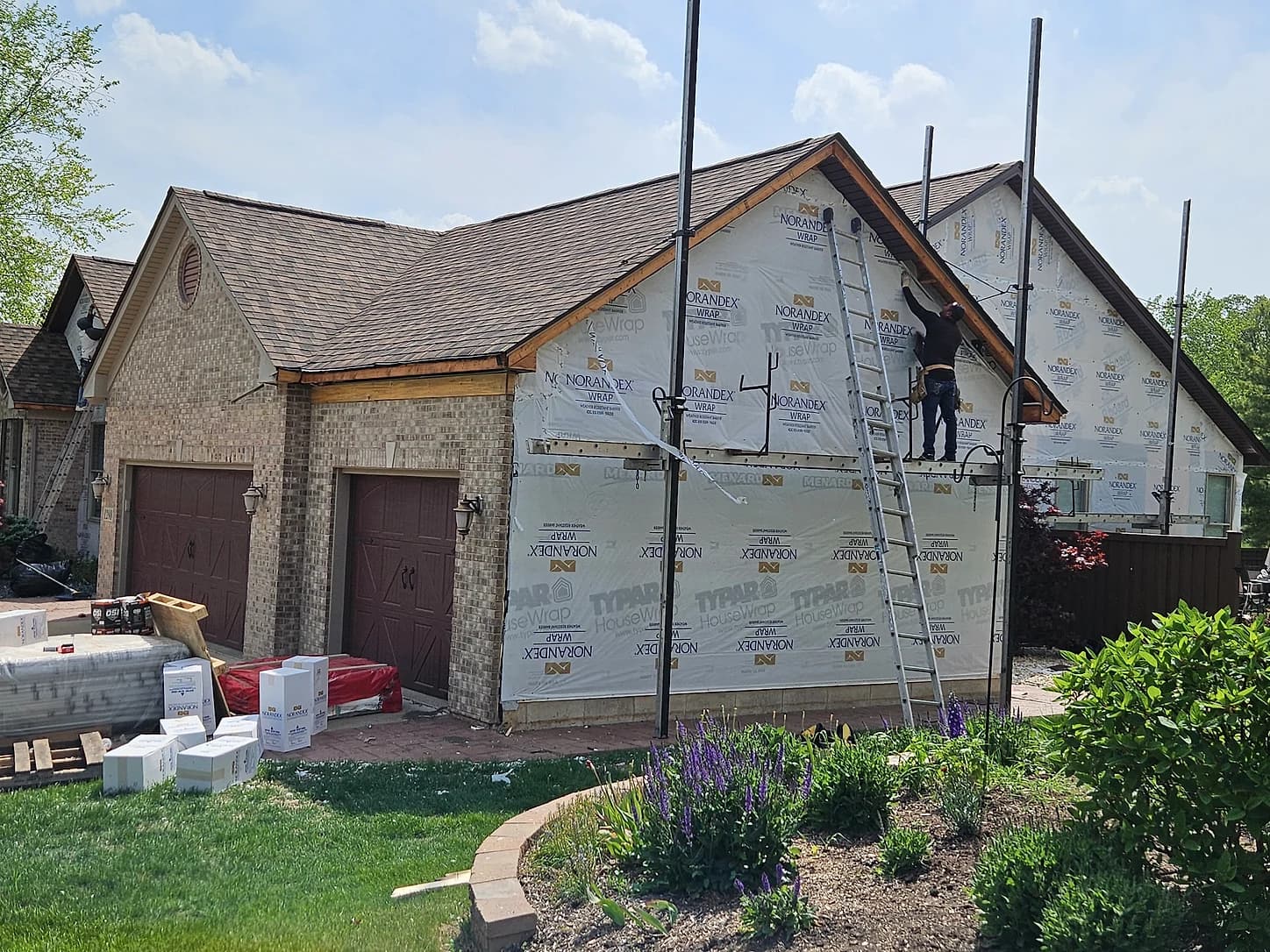
What a proper inspection looks at that a closer can't sell you on. This is where owner-operated stops being a slogan and starts mattering on the deck. The drip edge behind the gutters is where it gets expensive. On a lot of Cobb and Cherokee homes it is left short or spaced wrong, so water wicks back into the fascia instead of into the gutter, and two years later that is rot the homeowner pays for. Run a hand along a roof a sales crew rushed and the nails are set too high, above the shingle's nailing strip. From the street that row looks fine. In the next 110 mph gust it is the row that lifts. Pull back the first course on the eave and sometimes there is no starter strip at all, just a field shingle flipped backward, which is the exact line where wind gets under a roof. Every one of those goes in our written report, with a photo behind it.
Every one of those is also a warranty problem. A GAF Timberline HDZ shingle is only rated to 130 mph when it goes on with four nails in the StrikeZone area plus the right starter, ridge cap, leak barrier, and ventilation. Manufacturers deny warranty claims when they find high nails, a missing starter strip, or out-of-spec ventilation. The install holds the warranty, not the brochure, and a closer cannot feel any of that from your driveway.
Why my old job documenting claims changes how DJK reads a roof. For five years I worked on the insurance side, adjusting claims. I am not an adjuster now, and DJK does not file, adjust, or negotiate claims, because in Georgia only a licensed public adjuster can. What that background left me is an eye for documentation. We photograph a roof the way a carrier's adjuster does, the soft metals, the collateral on the gutters and the screens, the date that has to match the storm. So we document what we find for your records. You work with your insurer, and we work on your roof.
The fixed written quote is the promise. A real estimate is itemized, and what is on the page is what gets built. A good one spells out the tear-off and disposal, deck-board replacement at a set per-sheet rate, the underlayment, starter strip, drip edge, and flashing. It names the exact shingle line, color, wind rating, and nailing pattern. It states the ventilation plan, the cleanup, the permit, proof of license and insurance, and the warranties. When a quote says "as needed" or "sealant repair" with no detail, that vagueness is where the surprise charges hide. A salesman's verbal pitch is air. The written quote is the thing you can hold the company to, and the owner who wrote it answers for every line of it.
Reviews help. They stopped being enough. Online reviews still matter, and 91 percent of homeowners read them before picking a contractor. The trouble is they have gotten easy to fake, and trust in them slid from 79 percent in 2020 to 42 percent in 2025. A star rating tells you a company exists. It does not tell you who shows up. We have an A+ rating with the BBB and have been roofing the north metro since 2017, and that record matters. The better proof is simpler. DJK is owner-run: the owner prices your roof and signs the contract, and our own crews build it. You can meet Don and the DJK story if you want to see who that is, or look over our north-metro Atlanta roofing work.
Here is the second-read version, the one I would want a homeowner to repeat to their spouse at the kitchen table. The salesman's incentive runs opposite to yours. He earns the most when he closes fast and never comes back. You get paid back over twenty-five years only if the roof is actually built right. An owner who quotes and builds has his own name on the failure mode, which is why I would rather lose the sale than oversell the job. You work with your insurer, we work on your roof, and the man who quoted it is the one whose name is on the contract.
A few quick answers homeowners ask me. Do roofing companies really use commissioned salesmen? Most of the bigger ones do, and that commission runs 7 to 12 percent of your contract. Who actually quotes your roof? At a sales org it is usually the rep who knocked, not a roofer, and often not the crew who will build it. With DJK the quote comes from the owner, every time, built on a documented inspection with photos you keep. What is an owner operated roofing company? It is one where the same person quotes, signs, and is reachable after the job, instead of a closer who hands you off and disappears. What should a written roof estimate include? Tear-off and disposal, deck-board replacement priced per sheet, underlayment, starter strip, drip edge and flashing, the exact shingle line and nailing pattern, ventilation, cleanup, the permit, license and insurance proof, and the warranties, all itemized. Why do roof salesmen come to your door after a storm? Because hail drives a wave of insurance claims, and that wave is an easy door-to-door market, so the chasers follow the weather into the metro. Can a roofer pay your insurance deductible in Georgia? No. It is illegal here and treated as fraud, so anyone offering it is telling you what kind of operation they run.
If a storm came through your area, get a roof inspection that ends in a written report and a quote the owner signs. We document what we find for your records and hand you a fixed, itemized written quote you can hold us to. You work with your insurer, we work on your roof. Book a free inspection and the quote you get will have my name on it.