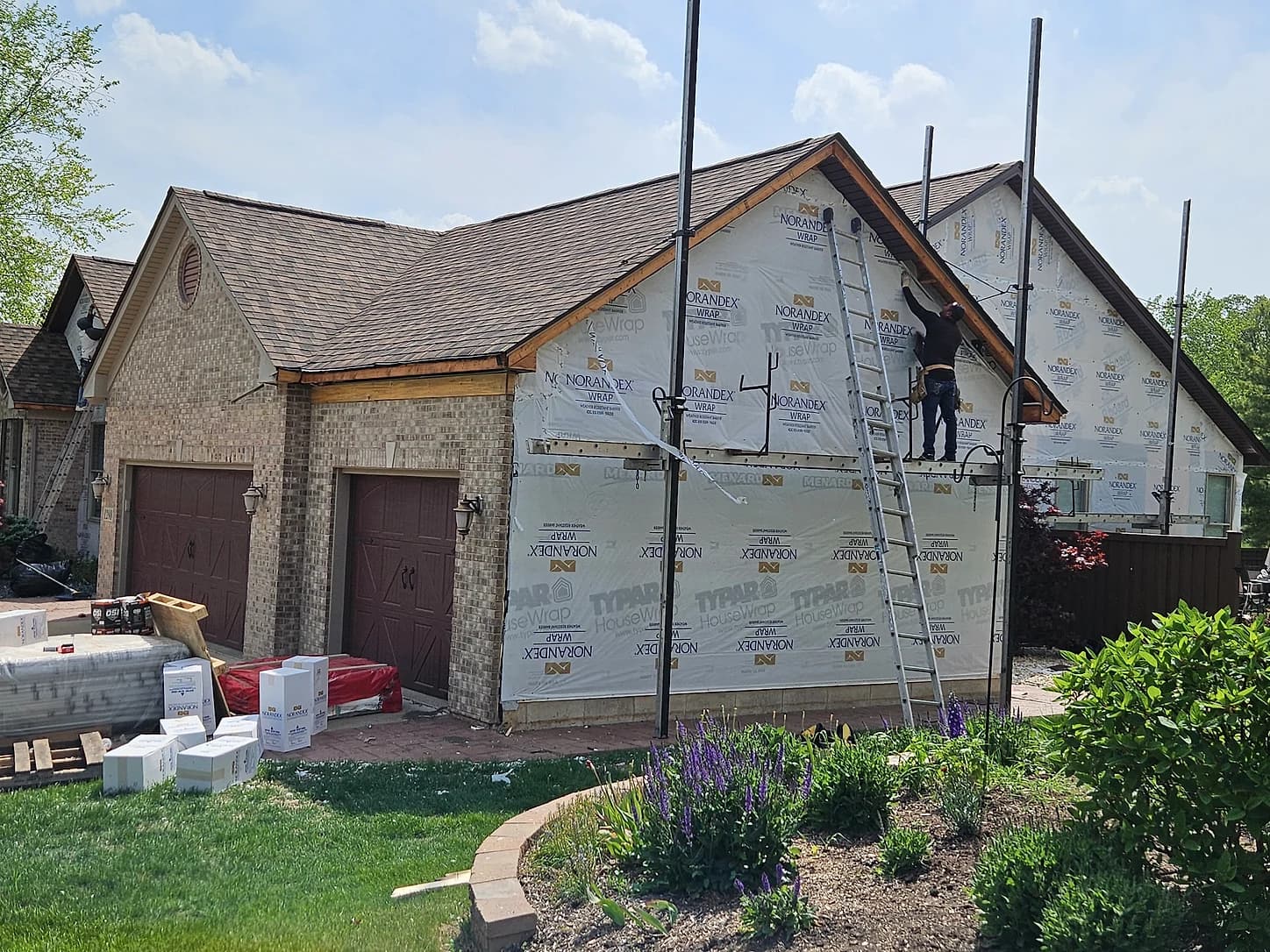
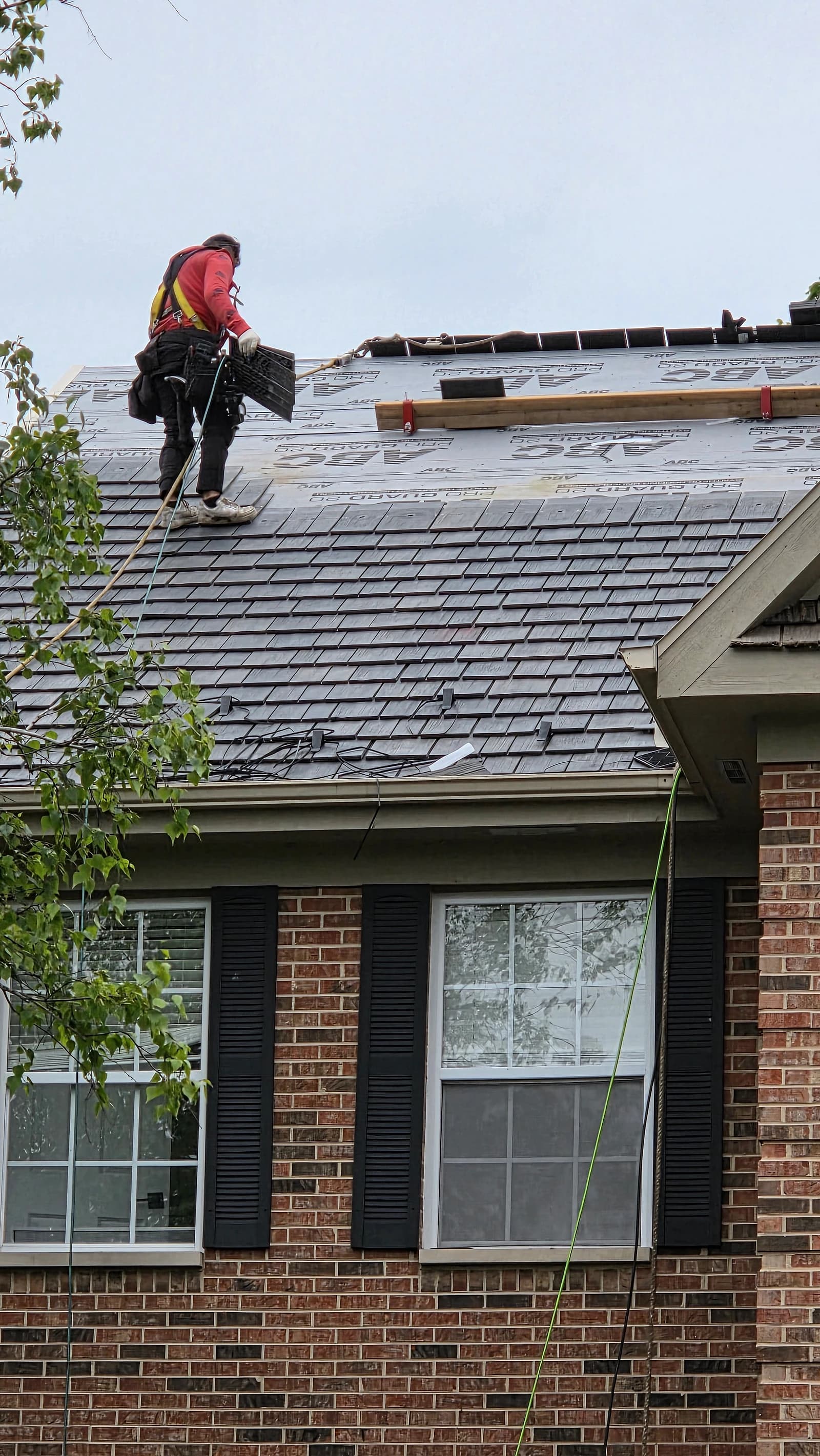
If your roof is leaking after an Atlanta storm, the next hour matters more than the next week. An emergency roof leak in Atlanta usually shows up the same way: a hard afternoon cell rolls through Cobb or Cherokee or North Fulton, and by evening there's a brown ring spreading across the bedroom ceiling. I've walked into that exact scene more times than I can count. What you do in the first hour decides whether this stays a small patch or turns into a drywall-and-mold job. Here is the order I tell homeowners to work in.
Quick version, in sequence: kill the power if water is near a fixture, contain the drip, drain a bulging ceiling on purpose, find roughly where it's coming from, tarp it if it's still raining, and photograph everything before you clean up. That's the whole first hour. The rest is the detail behind each step.
Kill the power first if water is anywhere near a light or fan. Water and a live circuit is the one thing here that can actually hurt you. If you see a drip near a ceiling light, a fan, or a smoke detector, shut off the breaker to that room before you touch anything. The roof can wait an hour. And nobody goes up on a wet roof in the rain. Falls during a storm are the real danger, not the water.
Contain the water and save your floors. Move what you can out from under the drip, then put a bucket down with an old towel inside to kill the splashing. Here's the trick most folks miss: if water is sheeting down a wall or off the ceiling, pin a length of string to the wet spot and run it into the bucket. The water follows the string straight down instead of spraying your hardwood. Costs nothing, saves a floor.
If the ceiling is bulging, drain it on purpose. A sagging ceiling is holding pounds of water. Don't leave it alone. Put a bucket under it and poke one small relief hole right in the center of the belly. It feels wrong to put a hole in your own ceiling, but a controlled drain beats the whole thing letting go at once and dumping water and drywall on the floor.
Now the part most people get wrong: the leak isn't where the stain is. Water doesn't drop straight down. It rides the felt and runs down the deck and rafters until it finds a seam or a nail hole to drip through. By the time it stains your ceiling, it's already traveled, often four to eight feet sideways from where it got in. That's the second-read truth of this whole job: the stain is the exit, not the entrance. Patch the spot right above the stain and the leak comes right back, because the real entry point is still open uphill. That's what honest Atlanta roof leak repair actually is: tracing the water back to where it started, not covering the symptom.
What I look for up in the attic. I follow the water uphill against the slope of the deck, looking for the dark, swollen trail on the underside of the sheathing. Nine times out of ten it lands on one of two things: a cracked pipe-boot flashing (the rubber collar around a vent pipe that dries out and splits) or a leaf-clogged valley backing water up under the shingles. After hail I'm also checking for bruised, soft shingle mats, the slow damage that looks fine from the ground and leaks weeks later. Find the source and the fix is simple. Guess at it and you pay twice.
When to tarp, and what it should cost. Tarp now if it's still raining, the leak is active, or a roofer can't get out same-day. The tarp isn't the repair, it's what buys you a few dry days. As a ballpark, national cost guides like Angi and HomeAdvisor put emergency tarping from around a thousand dollars up into the low thousands for a bigger or after-hours job. That's not our price, just what to expect. Next to a soaked ceiling and a mold bill, a tarp is cheap. If water's still coming in, that's an emergency roof repair call, not a wait-till-Monday call.
Document everything before you clean up. This is the step that protects you later. Photograph four things: the active leak while it's dripping, anything of yours that got ruined, the wet building materials, and whatever you did to stop it. Then a word on insurance, because Georgia draws a hard line. We document the damage to the scope your carrier will accept. You work with your insurer, we work on your roof. That separation is the law here, and any roofer who promises to take the claim off your hands or pay down your deductible is offering something a contractor legally can't do in Georgia.
Whether the storm matters for coverage. Most policies cover sudden, accidental damage (wind, hail, fallen trees) and exclude slow wear-and-tear. That's why photos tying this leak to a specific storm are worth taking. On timing, most Georgia policies want prompt written notice, and per claim guides like Brelly, proof of loss commonly lands inside about sixty days, with the insurer required to acknowledge within roughly fifteen. So document now and notify promptly, even while you're still deciding whether to file.
Sometimes the honest answer is don't file. I've told homeowners straight that their small leak isn't worth a claim. If the repair runs a few hundred dollars and your deductible sits well above that, filing just dings your record for no payout. A claim makes sense when the storm did real, expensive damage, not when the fix is smaller than what you'd pay anyway. I'd rather tell you that than push you into a claim you don't need.
Why the first hour, and not the first afternoon. The EPA is plain about it: dry out a wet area within twenty-four to forty-eight hours and, in most cases, mold won't grow. Past that window it starts colonizing the drywall and insulation, and now you're not patching a roof, you're tearing out a ceiling. Get it dry, get it covered, get it documented, in that order, inside the first day.
And that's the sequence. None of it needs a roofer. What does is finding the real source uphill and fixing it so it doesn't come back, and you want someone who'll actually climb up there. North Atlanta gets hammered every storm season. The National Weather Service office in Peachtree City counts roughly seven big-hail days and nineteen damaging-wind days a year here, hail worst in April, wind worst in July, so this isn't rare. It's a Tuesday in summer.
Water still coming in? Call my crew for a same-day emergency tarp and a documented inspection. We get it stabilized, we trace the leak back to its real source, and we hand you the photos and the scope your insurer will want. You work with your carrier, we work on your roof. Get emergency help at /atlanta-emergency-roof-repair, or call us at (470) 703-9727. We will find where it's actually getting in. Don.